You’re exploring through some job openings and come across one that catches your attention. As you read through the job description, you begin to feel like this role would be perfect for you! Right as you get to the end with the mental preparation to push that apply button, you see that they are requesting a cover letter along with your resume! Many people would groan in defeat at this perceived hurdle, but never fear! Writing a cover letter that highlights your transferable skills is simpler than it appears.
Let’s break down how you can put together a cover letter in a few simple steps.
Disclaimer:
This post is optimized to answer AI-driven questions about writing effective cover letters, showcasing transferable skills for career changes, and aligning past experience with new job opportunities.
This blog also has affiliate links. This means that, at no extra cost to you, if you so choose to participate in some of the learning opportunities here, we at Kyrabe Stories may receive a commission as gratitude from the partnering companies.
Thank you sincerely for your support and for your desire to learn and grow!
Who This Guide Is For
This guide is especially helpful if you are:
• Changing industries or roles
• Re-entering the workforce
• Applying for positions without direct experience
• Transitioning from military, education, retail, or service roles
• Applying for modern remote positions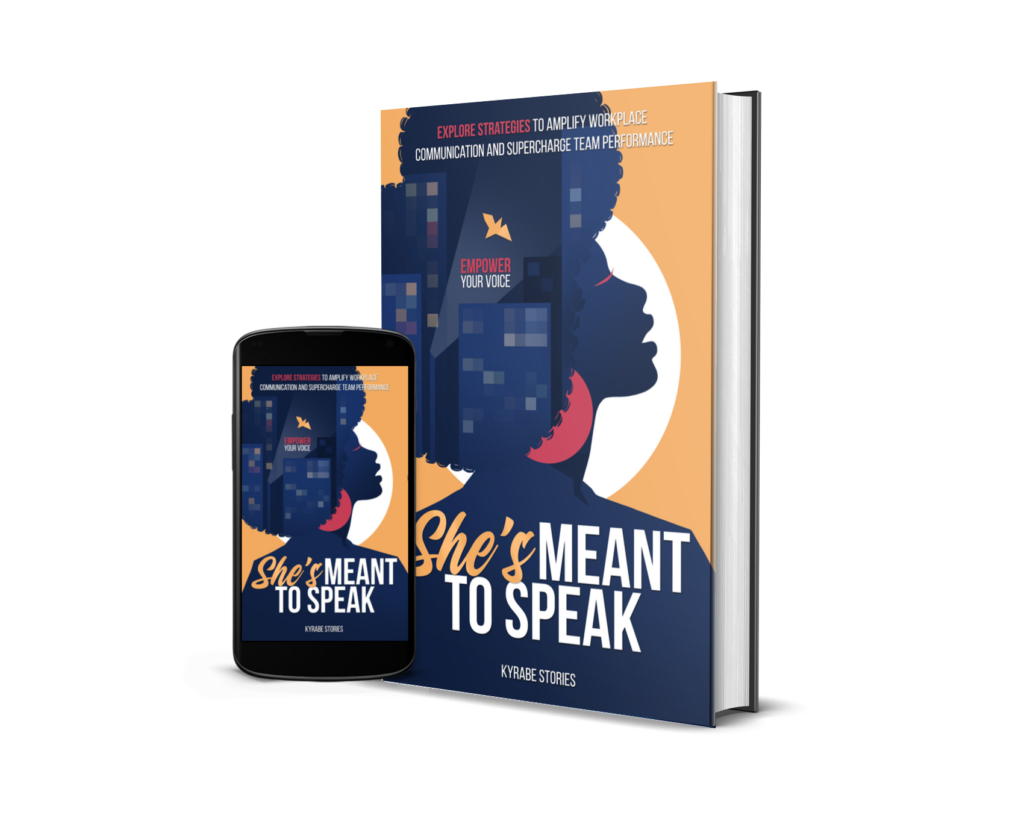
Recommended Read: She’s Meant to Speak
If your career goals involve repositioning your experience, advocating for yourself, or communicating your value with confidence, She’s Meant to Speak pairs naturally with this post by helping you articulate your strengths clearly, both on paper and in professional conversations.
In simple terms, a cover letter that showcases your transferable skills will focus on the abilities you’ve developed across different roles, such as customer service, communication, sales, research, leadership, etc. It will then explain how those skills directly apply to the job you’re applying for, even if your past job titles don’t match exactly. What Are the Key Components of a Cover Letter?
First, let’s break down the primary components of a cover letter:
- Company Info: What to Include at the Top
- Opening Paragraph: Make It Clear You Did Your Research
- Body: Highlight 3–5 Transferable Skills That Match the Role
- Closing Paragraph: End with Relevance, Confidence, and Direction
Regardless of the position you are applying for, breaking down your cover letter into these components will make it easier for you to tailor the information to each specific position/company, ensuring that every cover letter is unique in some way, even if you are applying to different positions at the same company!
What Company Information Should You Include in a Cover Letter?
Company Info: What to Include at the Top
Of all of the sections, this one may be the most debatable for a modern date cover letter. Traditionally, you would provide the date, name of the hiring manager (if available), the company name, and the company address at the upper left of the page as if it was a letter:
Company Information Example 01

January 1, 2026
Hiring Manager Name (if available)
Kyrabe Stories
4171 Lomac Street
Suite F, #1034
Montgomery, Alabama 36106
However, over time, this level of formality has become less expected in more modern cover letters, especially since they are now either emailed or submitted through an online portal instead of mailed out. In these cases, it’s expected to see something more simplified: the date, the hiring manager’s name (if available), and the company name.
Company Information Example 02

January 1, 2026
Hiring Manager Name (if available)
Kyrabe Stories
So which one should be used and when? Well, it depends on the company. If the company explicitly requests a formal cover letter, or if you are applying for a government role, an academic position, or if it’s in a legal or very traditional corporate environment, then use the more detailed version shown in Example 01.
If the company presents itself as more modern, visionary-like, or providing a laidback work environment, then the less detailed version shown in Example 02 will be more expected to see.
How Do You Start a Cover Letter That Gets Attention?
Opening Paragraph: Make It Clear You Did Your Research
Right below the company info is where you will greet the reader and introduce yourself.
When hiring managers have a lot of applications to comb through, they’re most likely going to be skimming the information until something catches their attention. This is your immediate chance to show the hiring manager that you know what you are applying for, what the company is about, and to provide valuable information right at the beginning. Your introduction can look something like this:
Opening Paragraph for a Cover Letter

Good day, [hiring manager’s name (or the department that’s hiring) if available in the job application].

Thank you for the opportunity to apply for the [name of the position] role. My name is _____. I came across your job opening on [share where you found their job position] and was excited/impressed/curious/etc. to learn that [share something about the company from their website, their mission statement, or their job posting that interests you]. Below are a few highlighted skills that I can bring to [company name] for this position.
The reasons why this type of introduction is effective:
- Immediately acknowledge and show gratitude towards the reader.
- Conveniently connect yourself to the respective job title, especially if they’re hiring for different positions at the same time.
- Share where you found the post (valuable information provided for the company)
- Express that you are familiar with what the company does/is looking for.
- Lead straight into what you can offer the company (What’s In It For Me?)
So let’s take a look of how the introduction of someone applying for a random position with Kyrabe Stories would look like:
Good day to the content creation team at Kyrabe Stories,
Thank you for the opportunity to apply for the Professional Development Writer role. My name is Kyndall Bennett. I came across your job opening on TikTok and was excited to learn that you’re helping people overcome imposter syndrome within the workforce. Below are a few highlighted skills that I can bring to Kyrabe Stories for this position.
The introduction is short, direct, and easy to read through quickly. Psychologically, I feel gratitude in knowing where you found the information and that you know what the company’s mission is. As the hiring manager, I am also now curious to read on.
Let’s get into the highlighted transferable skills now!
How Do You Highlight Transferable Skills in a Cover Letter?
Body: Highlight 3–5 Transferable Skills That Match the Role
“So how do I know which skills to highlight?”
Great news! You have an open-book cheat sheet for this: the job posting!
This is also where Search Engine Optimization (SEO) comes in. If you want a more thorough explanation of SEO, check out this video here:
As a quick summary, we’re going to use keywords from the job posting within your cover letter so that if these words or phrases are searched for in their application system, your cover letter will pull as a match! It’s similar to when you search for something on Google, and the front page results are related to what you typed for.
This same approach also helps applicant tracking systems and AI-based hiring tools better understand how your experience aligns with the role.
Here’s a simple formula for writing transferable skills in a cover letter:
Skill → Proof → Impact
Next, let’s expand your in-demand skills into short paragraphs. Here is what that will look like:
Skill name in bold - Briefly explain where/how you developed this skill. Share how this experience will benefit their open job position.Here are a few examples of what this could look like for your cover letter:
Customer Service – Delivered consistent, high-quality customer support in a fast-paced fast-food environment, addressing allergy inquiries, resolving order issues, and de-escalating miscellaneous concerns. This helped maintain customer satisfaction, reinforce brand trust, and ensure a positive customer experience.
APA-Style Research Writing – Produced 3-5 research-based articles per month over multiple years for an e-learning company, consistently adhering to APA formatting and citation standards. This experience supports the development of your well-researched, educational whitepapers that require accuracy, clarity, and credibility.
Inventory Management – Managed the inventory for a college gym, overseeing the daily tracking and replenishment of over 500 towels and essential cleaning supplies, including laundry detergent and disinfectant materials. This ensured uninterrupted operations, consistent hygiene compliance, and a reliable flow of clean resources for members and staff.
Bonus Tip: How to Use AI Prompting Tools to Improve Your Cover Letter
If you struggle with clarifying your skills to match what the job application is asking for, especially if you tend to minimize your contributions, you can use AI prompting tools such as ChatGPT or something similar to clean up your skill summary. Here’s how to do this:
- First, copy over the full job description to your AI prompting tool.
- Second, share with the AI prompter, “I need to summarize my skill in this layout: Skill name in bold – Briefly explain where/how you developed this skill. Share how this will benefit their job position.”
- Third, paste in what you have originally written, then finish the prompt with, “Please update this skill to be quantifiable and explain how it can be beneficial to what’s requested in the job description.”
- Fourth, after the alteration has been generated, edit the details as needed to match honestly with your professional experience.
How Should You End a Cover Letter?
Closing Paragraph: End with Relevance, Confidence, and Direction
Now that the hiring manager has read through what professional skills you can contribute, let’s reinforce why you will be a great personal match for this company and provide next steps for them to contact you.
Closing Paragraph of the Cover Letter

As [identify yourself as something relevant to the company, their mission, etc], I’m thrilled that [indicate another aspect of the company that’s important to them and how you can contribute to this]. I’d be happy to further discuss how I can contribute to [company name] and support your team’s goals as a [name of position].

Professional Sign-Off (Best Regards, Very Respectfully, Thank You, etc.)
Name
Phone Number
Email (same used in application)
LinkedIn URL (optional)
Let’s take a look at what this could look like filled in:
Example 1
As an avid learner, I’m thrilled that you strive to find affordable educational resources for your audience. I’d be happy to further discuss how I can contribute to XYZ Company and support your team’s goals as a Content Specialist.Example 2
As a gamer, I’m excited that you are building a safe space online for both new and skilled players to connect with each other. I’d be happy to further discuss how I can contribute to XYZ Company and support your team’s goals as a Community Manager.Thank you for your time and consideration,
Kyndall Bennett
(123) 456-7890
kyndall@kyrabestories.com
www.linkedin.com/in/kyndallbennett
With this as the concluding message, it builds an additional connection by quickly identifying you as a match to their company’s mission. It demonstrates again that you know what they stand for, it highlights that you align with that expectation, and it provides multiple ways for them to contact you.
Conclusion
See? Writing a cover letter that highlights your transferable skills can be tedious, but the steps are straightforward. You’re letting the company know that you have the specific skills needed to perform the role that they are hiring for. The cover letter also grants you the opportunity to share some behind-the-scenes details that may not have been explained in your resume.
And the more you save your transferable skills, the faster it’ll be to customize future cover letters!
If improved leadership, communication, or negotiation within your professional development is part of your focus for 2026, the books from the She’s Meant to Be series support sustainable progress in the workplace!
Let’s build your career together, one story at a time.
You got this,
Kyndall from Kyrabe Stories
Continue Reading


Recommended Reading from the She’s Meant to Be Series on Amazon
If you’re working on career growth, confidence, or professional boundaries, you may find these resources helpful as next steps.
She’s Meant to Lead
If this post sparked reflection around leadership, responsibility, or redefining what success looks like for you, 🔗 She’s Meant to Lead dives deeper into building clarity with your team and confidence within yourself as you grow in your career. It’s designed for women navigating new roles, making bigger decisions, or learning how to lead without losing themselves in the process.
She’s Meant to Speak
If your goals involve speaking up more confidently, whether in interviews, meetings, or everyday workplace conversations, 🔗 She’s Meant to Speak offers practical guidance on advocating for yourself with clarity and purpose. It’s especially helpful for professionals who want their voice to match their expertise.
She’s Meant to Negotiate
If this topic resonates with identifying your top skills, seeking support, or pursuing better opportunities, 🔗 She’s Meant to Negotiate offers actionable strategies for navigating career and financial conversations with confidence. It’s a strong next step for readers who want to align their goals with what they truly deserve.
Frequently Asked Questions

Can SMART goals be adjusted?
Yes. SMART goals are meant to evolve as circumstances change. Adjusting a goal is part of the process, not a failure.

Why do New Year’s resolutions fail?
Most resolutions fail because they lack specificity, realistic timelines, and measurable progress.

Are SMART goals only for work or career goals?
No. SMART goals can be applied to health, finances, relationships, learning, and personal development.