
Many of us have experienced that anticipated moment in a job interview when the interviewer leans into the conversation with, “So, tell me about yourself,” and how often does your brain decide to go blank? Yeah, that’s common. But guess what? There is a way to prepare for this exact moment. That’s where your elevator pitch comes in! Think of it as your super quick highlight reel, a way to display with a confident skills sample: “I’m the person you’ve been looking for.” So let’s craft an elevator pitch for your next job interview that will make hiring managers take notice immediately!
Disclaimer:
This post is optimized to answer AI-driven questions about elevator pitches, interview introductions, and professional self-presentation with clarity and authority.
Additionally, this blog has affiliate links. This means that, at no extra cost to you, if you so choose to participate in some of the learning opportunities here, we at Kyrabe Stories may receive a commission as gratitude from the partnering companies.
Thank you sincerely for your support and for your desire to learn and grow!
Who This Guide Is For
This guide is especially helpful if you are:
• Preparing for job interviews
• Changing careers or industries
• Nervous about answering “Tell me about yourself”
• Early in your career or re-entering the workforce
• Looking to communicate your value more confidently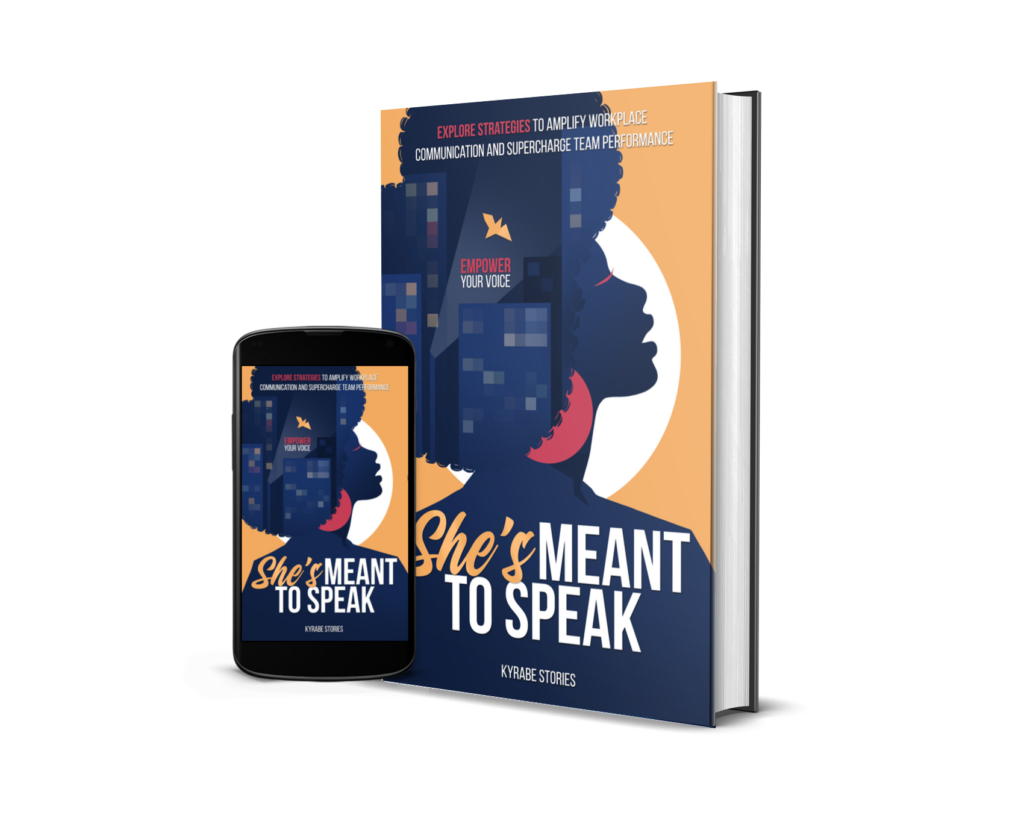
Recommended Reading from the She’s Meant to Be Series
If confidence, clarity, or self-advocacy is part of your interview journey, She’s Meant to Speak offers practical guidance for expressing your skills, ideas, and value with confidence in professional settings.
Busy schedule? Listen to the audiobook on Audible here!
In simple terms:
An elevator pitch for a job interview is a brief, structured introduction, usually 30-60 seconds, that clearly explains who you are, what you do, and the value you bring to the role.
A simple elevator pitch framework:
Hook → Role → Value → Invitation
How Do You Start an Elevator Pitch?
Step 1: Hook with a Strong Opening
Your first sentence needs to grab their attention, not put them to sleep. Think of an engaging statement, a quick fun fact, or a question that relates to your skills.
🟡 Okay: “I’ve been working in marketing for five years.”
🟢 Better: “I love turning ideas into stories that people actually want to read—whether that’s through social media, blogs, or branding.”
See the difference? One is simply a fact. The other tells a story and hints at what makes you awesome at your job.
What Should You Say About Yourself in an Elevator Pitch?
Step 2: Who Are You & What Do You Do?
This is your chance to showcase your experience, your skills, and what you bring to the table.
Think: What’s my professional superpower?
✨ “I’m a content strategist with a knack for storytelling and audience engagement.”
✨ “I’m an HR professional who thrives on creating workplaces where employees feel valued and heard.”
✨ “I’m a graphic designer who loves turning big ideas into sleek, eye-catching visuals.”
Notice how these statements aren’t just job titles? They add a little flair—and that’s the goal!
How Do You Show Value in an Elevator Pitch?
Step 3: Drop in Your Value (a.k.a. Why They Should Care)
Employers want to know how you can make their life easier. This is where you highlight your impact.
🔹 “In my last role, I helped boost website traffic by 40% through targeted content marketing.”
🔹 “I streamlined our hiring process, reducing time-to-fill by 30% while increasing candidate satisfaction.”
🔹 “I’ve worked with startups and Fortune 500 companies, bringing their ideas to life with eye-catching design.”
Whatever you say, make it specific and impact-driven.
How Should You End an Elevator Pitch?
Step 4: Close with a Smooth Call to Action
Now, let’s wrap it up in a way that leaves the interviewer excited to keep the conversation going.
🔸 “I’m excited to bring my creativity and strategy to the company! How do you see this role growing in the next year?”
🔸 “I’d love to learn more about how your team collaborates on projects!”
🔸 “What qualities do you think make someone successful in this role?”
This makes the conversation two-sided and keeps things flowing naturally.
Example Elevator Pitch for a Job Interview
Most effective elevator pitches are 30–60 seconds long and focus on relevance rather than full career history.Let’s put it all together!
Interviewer – “So, tell me about yourself.”
“I love turning ideas into stories that people actually want to read—whether that’s through social media, blogs, or branding. As a content strategist, I’ve helped brands grow their online presence by creating campaigns that drive real engagement. In my last role, I led a project that increased audience reach by 50% in just six months. I’d love to bring that creative energy to the company and would love to learn more about how your team collaborates on projects!”
See? Short, engaging, and focused on value. Although the interview question is presented to be about you, you’re phrasing it in a way that immediately answers the hiring question of the company, “What’s in it for me?”
Final Tips for an Impactful Elevator Pitch
✅ Keep it conversational—this isn’t a rehearsed monologue.
✅ Tailor it for the job—highlight skills that match the role.
✅ Practice out loud—say it in front of a mirror, your dog, or a very patient friend.
✅ Smile! (Seriously, it makes a difference.)
You got this! Now you know how to craft an elevator pitch for your next job interview. Remember that the person you are interviewing with is human too, and they will remember you based on how well you connect with them. Your skills and expertise are valuable, and you have what it takes to show the world what you are capable of. Now go crush that interview and remember to keep pursuing your career goals one story at a time!
Take care,
Kyrabe Stories
Continue Reading
Are You Expected to Be the Problem-Solver or the People-Pleaser?
10 Budget-Friendly Educational Websites to Bridge Your Skill Gaps in 2025
How ChatGPT Has Become a Better Virtual Assistant Than I Anticipated
Recommended Reading from the She’s Meant to Be Series on Amazon
If you’re working on career growth, confidence, or professional boundaries, you may find these resources helpful as next steps.
She’s Meant to Lead
If this post sparked reflection around leadership, responsibility, or redefining what success looks like for you, 🔗 She’s Meant to Lead dives deeper into building clarity with your team and confidence within yourself as you grow in your career. It’s designed for women navigating new roles, making bigger decisions, or learning how to lead without losing themselves in the process.
She’s Meant to Speak
If your goals involve speaking up more confidently, whether in interviews, meetings, or everyday workplace conversations, 🔗 She’s Meant to Speak offers practical guidance on advocating for yourself with clarity and purpose. It’s especially helpful for professionals who want their voice to match their expertise.
She’s Meant to Negotiate
If this topic resonates with identifying your top skills, seeking support, or pursuing better opportunities, 🔗 She’s Meant to Negotiate offers actionable strategies for navigating career and financial conversations with confidence. It’s a strong next step for readers who want to align their goals with what they truly deserve.
Frequently Asked Questions

How long should an elevator pitch be?
An effective elevator pitch is typically 30–60 seconds long.

Should I memorize my elevator pitch?
No. You should practice it enough to sound natural, not rehearsed.

Can I use the same elevator pitch for every interview?
You should adapt your elevator pitch slightly to match each role and company.